REFLEJO
REFLEJO
experimental dispositif for the perceptual construction of the experience of reality
The reflection does not reproduce reality.
It opens a space in which reality can be questioned.


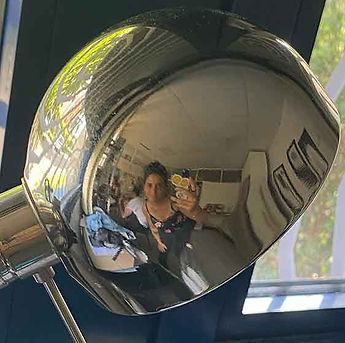


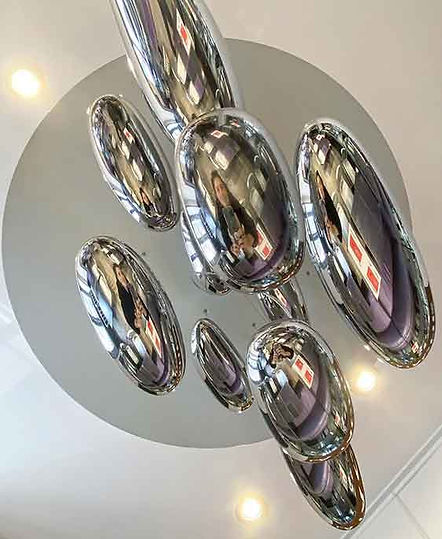


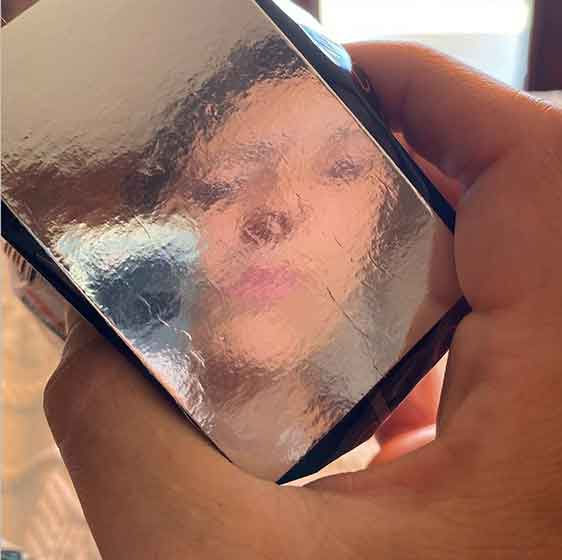

Reflective surfaces function here as an experimental dispositif based on a practice of perceptual reflexivity. By deliberately seeking surfaces that fragment, distort, absorb or multiply my image, I seek neither to produce self-portraits nor to document optical phenomena. I use reflection as an observational protocol through which to question how the perception of the body, space and reality are simultaneously constructed. Each photograph results from a conscious gesture. I choose the surface, the point of view, the distance, the moment and the way in which I inscribe my presence within it. What is recorded, therefore, is not a reflection, but the experience of a reflection: the encounter between a body, a space, a surface and a gaze. Reflection then becomes a space of negotiation between what is given to me and the way I choose to appear within it. Although I do not control the surface that reflects an image back to me, I can nevertheless choose the relationship I establish with it. Each photograph thus becomes a construction rather than a simple capture. This research examines a broader hypothesis: if a simple modification of the surface is enough to transform our perception of the body and space, to what extent does the reality we experience already depend on the dispositifs through which we look at it? Each image then becomes the reflection of a reflection. Photography does not fix a reality; it already records an interpretation of it. The viewer's gaze, in turn, produces a new interpretation, extending this process of reflection into a potentially infinite succession of perceptions, projections and relations. REFLEJO thus proposes considering reflection not as a duplication of the world, but as a perceptual model in which reality is continually constructed, transformed and recomposed through the relationship between the body, space, the gaze and the one who observes them.


If every reflection already constitutes the experience of a reflection, how far does this chain of perceptual constructions that we call reality extend...
At what point do we cease to observe a reflection and begin to inhabit the reality it constructs...
And what if our experience of reality were itself only the reflection of a relationship that we continue to construct...
If every gaze already produces a new reflection, how many realities do we construct before believing that we inhabit only one?
